
Explore 20 critical KPIs that are essential for maintaining an efficient supply chain and should be a part of your supply chain KPI dashboard.
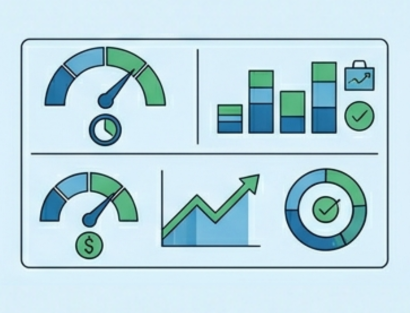
Modern supply chains can be complex, and using intuition alone isn’t enough to keep them running smoothly. Being vigilant and proactive is key for a manufacturing manager or supervisor, as any issues in one segment of the chain can have ripple effects throughout the system.
It’s not possible to oversee every single aspect of production manually, but by using technology and carefully choosing key performance indicators (KPIs), you can simplify the task of monitoring the effectiveness of your supply chain.
In this article, we’ll explore 20 critical KPIs that are essential for maintaining a resilient supply chain and should be a part of your supply chain KPI dashboard. We’ll discuss their significance and offer practical advice on how to leverage each.
Supply chain KPIs are measurable values that demonstrate the efficiency of supply chain processes and how effectively a company is achieving its key business objectives. These KPIs provide insights into specific operational areas, such as inventory management, order fulfillment, and supplier performance, that enable organizations to measure supply chain performance and identify areas for improvement, promoting informed decision-making based on real-time data.
Effective supply chain management is crucial for business success. By closely monitoring relevant KPIs, organizations can:
By tracking KPIs like inventory turnover and days of supply, businesses gain a clear understanding of their inventory levels and movement. This allows for precise adjustments, preventing both costly overstocking and disruptive stockouts.
Effective inventory control ensures that the right products are available at the right time, which minimizes waste and maximizes efficiency.
Monitoring KPIs like inventory carrying costs enables businesses to identify and mitigate expenses associated with holding inventory. These include costs related to storage, insurance, obsolescence, and opportunity costs.
By optimizing inventory levels and improving warehouse management, organizations can reduce these costs and improve their financial performance.
Tracking on-time delivery (OTD) KPIs ensures that products reach customers within the promised timeframe. Improved OTD rates enhance customer satisfaction and loyalty, reduce potential penalties for late deliveries, and solidify the company's reputation for reliability.
For example, if a company consistently follows through on its promise to deliver a product by Wednesday, its reputation will improve, and it won’t be in danger of losing customers to competitors. Efficient delivery processes contribute to a smoother and more dependable supply chain.
Supply chain disruptions can severely impact business operations and profitability. By tracking KPIs related to inventory levels and supplier performance, organizations can anticipate potential disruptions and take proactive measures to mitigate risks.
For instance, monitoring supplier quality performance can alert companies to issues before they escalate into larger problems, enabling them to switch suppliers or adjust processes before disruptions significantly impact operations.
Cash cycle time refers to the duration it takes for a company to convert its investments in inventory and accounts receivable back into cash. KPIs such as Days Sales Outstanding (DSO) and Days Payable Outstanding (DPO) provide insights into cash flow dynamics.
By analyzing these metrics, businesses can better manage their cash flow and ensure they have adequate liquidity to meet operational needs.
How you handle the entire supply chain management directly impacts profitability, as efficient management can reduce costs and improve operational efficiency.
KPIs such as gross margin return on investment (GMROI) and inventory turnover provide insights into the financial performance of the supply chain. By optimizing these metrics, businesses can maximize returns and achieve sustainable growth.
Customer satisfaction is a key driver of repeat business and brand loyalty. KPIs that measure service levels, such as Fill Rate, Perfect Order Rate, and On-Time Delivery, provide organizations with critical insights into customer experiences.
By closely monitoring these metrics, businesses can identify trends and areas for improvement. Consistent and reliable delivery, accurate order fulfillment, and efficient return handling contribute to enhanced customer satisfaction and loyalty.
Let's look at the critical supply chain KPIs and learn what they measure and what their respective formulas are.
Inventory turnover ratio indicates how often your inventory is sold and replaced over a specific time period. A higher turnover ratio suggests efficient inventory management, signifying that your inventory is sold and restocked frequently. Conversely, a lower ratio might indicate overstocking or potentially slow-moving inventory.
The formula for calculating the inventory turnover ratio is:
Inventory Turnover Ratio = Cost of Goods Sold (COGS) / Average Inventory
This metric measures the relationship between a company's inventory levels and its sales performance over a specific period. It provides insights into how much inventory is being held relative to sales generated. A high ISR can indicate excess inventory, which may lead to increased holding costs, whereas a low ISR may suggest strong sales performance with an efficient inventory turnover.
The formula for calculating the inventory-to-sales ratio is:
Inventory to Sales Ratio = Average Inventory / Sales
IDS indicates how many days a business can continue to meet customer demand, given its current inventory levels. This KPI helps organizations understand their stock availability in relation to the expected sales rate and is essential for avoiding stockouts or overstocking.
The formula for calculating IDS is:
Inventory Days of Supply = Average Inventory / Cost of Goods Sold (COGS) per Day
DIO tracks the average time it takes for inventory to be sold after being acquired. It measures how efficiently a company is managing its inventory and can reveal potential areas for improvement in inventory management processes. A lower DIO indicates that inventory is being turned over quickly, while a higher DIO might suggest overstocking or slower sales.
The formula to calculate DIO is:
(Average Inventory / COGS) x Number of Days in Period
This metric measures the efficiency and reliability of a company's delivery process by tracking the percentage of orders delivered by the promised date. It is a key indicator of a company's ability to meet customer expectations for timely delivery, which, in turn, affects customer satisfaction and retention.
To calculate on-time delivery, you can use the formula:
(Number of On-Time Deliveries / Total Number of Deliveries) x 100
Customer Order Cycle Time refers to the total time taken from when a customer places an order until they receive the product. This KPI is critical as it directly measures the efficiency and speed of your supply chain in fulfilling customer demands. Understanding this metric can help businesses identify bottlenecks and find opportunities for process improvements.
The formula to calculate the Customer Order Cycle Time is:
(Order Delivery Date - Order Placement Date) / Total Number of Orders Shipped
This KPI measures the percentage of orders that are delivered to customers without any issues, including being on time, complete, damage-free, and with accurate documentation. It provides a comprehensive view of how well a company is meeting customer expectations throughout the entire order fulfillment process.
The formula to calculate the Perfect Order Rate is:
(Number of Perfect Orders / Total Number of Orders) x 100
The Order-to-Cash Cycle Time measures the duration from when a customer places an order to when the company receives payment. It reflects the efficiency of order fulfillment and accounts receivable processes. A shorter cycle time indicates better cash flow management, operational efficiency, and lower financial risk.
The formula to calculate the Order-to-Cash Cycle Time is:
Order-to-Cash Cycle Time = Invoice Date − Order Date
The Cash Cycle Time measures the length of time a company's cash is tied up in its operations, from paying suppliers for inventory to receiving cash from customers for sales. This KPI is crucial for assessing a company's liquidity and working capital efficiency. A shorter cash cycle time means that the company can convert its investments into cash more quickly, improving financial flexibility.
The formula to calculate the Cash-to-Cash Cycle Time is:
Days Inventory Outstanding (DIO) + Days Sales Outstanding (DSO) - Days Payable Outstanding (DPO)
This metric represents the average number of days it takes a company to collect payment after a sale. This KPI is a key indicator of how effectively a company manages its accounts receivable. A lower DSO indicates that customers are paying their invoices promptly, which improves cash flow. A higher DSO might suggest that the company needs to improve its credit and collection policies.
The formula to calculate DSO is:
(Accounts Receivable / Total Credit Sales) x Number of Days in Period
DPO tracks the average number of days a company takes to pay its suppliers. This KPI reflects the efficiency of a company's accounts payable management. A higher DPO indicates that the company is taking longer to pay its suppliers, which can improve cash flow by retaining cash longer. However, excessively high DPO can strain supplier relationships.
The formula to calculate DPO is:
(Accounts Payable / Cost of Goods Sold) x Number of Days in Period
This KPI represents the total expenses associated with holding inventory over a specific period. These are the supply chain costs that include storage, insurance, obsolescence, depreciation, and the opportunity cost of capital tied up in inventory. A lower carrying cost indicates more efficient inventory management, reducing unnecessary expenses and improving profitability.
The formula to calculate Carrying Cost of Inventory is:
Total Inventory Holding Costs / Total Inventory Value x 100
FR measures the percentage of customer demand that is met without any backorders. A high fill rate indicates effective inventory management and customer satisfaction, while a low fill rate suggests potential stockouts and lost sales. This KPI indicates how well a business fulfills customer orders without delays.
The formula to calculate the fill rate is:
Fill Rate= Total Orders / Shipped Orders ×100
Freight Bill Accuracy measures the percentage of freight bills that are accurate and error-free. This KPI ensures that transportation costs are correctly accounted for, reducing discrepancies and improving financial accuracy. High freight bill accuracy minimizes disputes with carriers and ensures that payments are processed efficiently and correctly.
The formula to calculate Freight Bill Accuracy is:
(Number of Accurate Freight Bills / Total Number of Freight Bills) x 100
GMROI measures the profitability of inventory by comparing gross margin dollars to the cost of inventory. This KPI helps businesses understand the efficiency of their inventory management in terms of generating profit, so it should be added to the supply chain metrics dashboard for real-time tracking.
The formula to calculate GMROI is:
Gross Margin / Average Inventory Cost = GMROI
Inventory Velocity measures the speed at which inventory moves through the supply chain, indicating how quickly inventory is sold and replaced. This KPI reflects the efficiency of inventory flow and turnover. The formula is:
Cost of Goods Sold / Average Inventory (Same as Inventory Turnover Ratio)
In-Full Delivery measures the percentage of orders that are delivered with all items included as requested by the customer. A high in-full delivery rate enhances customer satisfaction and reduces the need for backorders or partial shipments.
The formula to calculate In-Full Delivery is:
(Number of Orders Delivered In-Full / Total Number of Orders) x 100
Backorder (BO) represents the number of customer orders that cannot be fulfilled immediately due to insufficient inventory. This KPI indicates potential issues with inventory availability and demand forecasting. A high number of backorders can lead to customer dissatisfaction and lost sales.
To calculate BO, use this formula:
Backorder = Total Back Ordered Items / Total Orders x 100
Supplier Quality Performance measures the quality of materials received from suppliers, usually based on the defect rates of delivered items. This KPI assesses supplier reliability and the impact of supplier quality on the company's operations.
The formula to calculate Supplier Quality Performance is:
Supplier Quality Performance= Total Deliveries / Defect-free Deliveries ×100
The Actual Delivery Date KPI gauges the efficiency of your supply chain operation by tracking the precise date when an order reaches your customer. This KPI is crucial because it measures on-time delivery performance, directly influencing customer satisfaction and fulfillment reliability.
The formula to calculate this KPI is relatively straightforward:
Actual Delivery Date = Date of Delivery − Due Delivery Date
Effectively tracking and managing the critical KPIs discussed in this article requires robust technology. KIMCO offers a comprehensive suite of features that can make supply chain management easier by streamlining operations, enhancing visibility, and driving data-driven decision-making.
KIMCO provides real-time inventory tracking, automated reporting for KPIs, and advanced analytics to help manufacturers predict customer demand and optimize logistics accordingly. Our cloud-based platform ensures seamless collaboration across your supply chain network, with customizable dashboards that allow everyone to focus on the metrics that matter most to the business.
To learn more about how KIMCO can benefit your organization, contact us today to book a demo.

Start your journey with KIMCO today and explore how our manufacturing management software can simplify your operations, step up productivity, and help you meet all your business goals.
